

Intro
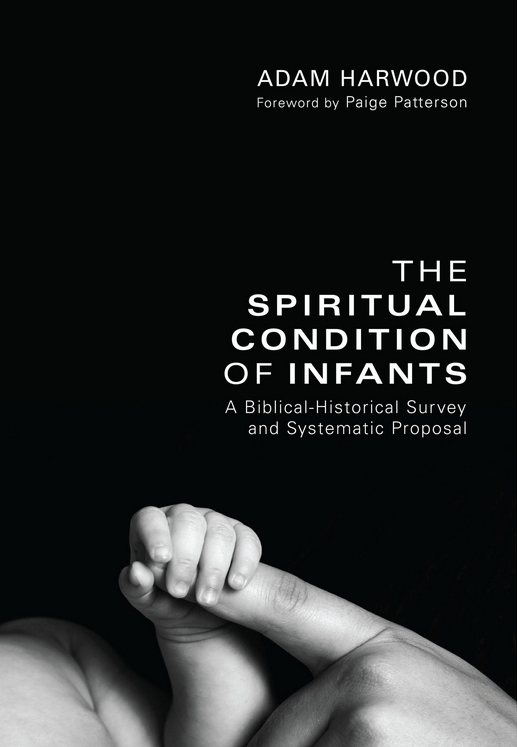
In The Spiritual Condition of Infants, Adam Harwood argues that infants are not born with the guilt of Adam’s sin (commonly referred to as original sin) and that we can confidently say that those who die in infancy are accepted into the salvation of God. The book is divided into three sections: Introductory, Biblical, and Historical. Overall, this was a good book and presented a capable defense of Harwood’s position that “infants inherit from Adam a sinful nature but not guilt. The sinful nature that infants inherit will eventually result in their becoming guilty by knowingly committing acts of sin. It is at that point that people immediately fall under God’s judgment and condemnation” (153). The book is firm in its assertions, but is written in a respectful manner. The tone of the book is set with the following instructive quote from Balthasar Hubmaier:
“I confess here publicly my ignorance. I am not ashamed not to know what God did not want to reveal to us with a clear and plain word.” (5)
While Harwood has more confidence on the subject than Hubmaier, he maintains a respectful and humble attitude while not drawing back from making confident assertions.
Book Overview
Introductory Section
In the introductory section, Harwood gives an overview of the debate on the spiritual condition of infants, namely, whether or not a person inherits the guilt of Adam’s sin upon conception. The argument of the book is that while there are consequences of sin that are passed down, including a sinful nature (i.e. a propensity to sin), a person is not guilty until they reach a level of moral accountability and commit sin.
Much of the introductory section is spent interacting with Wayne Grudem’s writing on the subject as found in his book Systematic Theology. Grudem presents the classic Augustinian-Calvinist view that infants are born with the guilt of Adam’s sin and are thus under God’s condemnation from conception. Harwood does an excellent job of dismantling Grudem’s argument (and thus the Augustinian-Calvinist argument). To the credit of both Harwood and Grudem, Harwood informs the reader that he actually read his critique of Grudem’s position at a conference where Grudem was in the audience. Grudem apparently took the critique graciously, even providing impetus for the author’s further writing on the subject (28).
Biblical Section
The second section of the book addresses some of the biblical texts related to infants, salvation, and inherited guilt (or lack thereof). Texts covered include Romans 5:12-21, Psalm 51:5, Ephesians 2:3, Genesis 6:5-6, 2 Samuel 12:23, Genesis 2-3, Deuteronomy 1:39, Luke 1:15, Mark 10:13-16, and 1 Corinthians 7:14. In these texts Harwood presents good reason to believe that, while sin’s consequences may pass down to other generations, sin’s guilt does not. So infants are not born with the guilt of sin, and do not become guilty until a willful sin is committed after a certain level of moral maturity is reached (an age of accountability).
Historical Section
The third section of the book gives a brief historical survey, giving representative examples on the subject. While the discussion overall was good, I particularly enjoyed the chapter on the Anabaptists. Representatives surveyed include Irenaeus, Gregory of Nazianzus, Gregory of Nyssa, Tertullian, Cyprian, Augustine, Luther, Zwingli, Calvin, Hubmaier, Marpeck, Boyce, Strong, Mullins, Hendricks, and Erickson. While the section provides a good general overview, the 19th and 20th century representatives come only from the Baptists (Boyce, Strong, Mullins, Hendricks, and Erickson). I don’t fault the author for focusing on those closest to him, but the section as a whole would have been just as strong, and more focused, had it ended with the Anabaptist representatives instead of stretching into the 19th and 20th centuries.
On Romans 5:12-21
The most interesting textual discussion in my opinion was that on Romans 5:12-21. Perhaps the most important point made in the discussion (here Harwood heavily relys on Millard Erickson’s comments) is that according to the logic of the text, there are two options: 1) Adam’s guilt is imputed to all automatically, therefore Christ’s righteousness is imputed to all automatically or 2) Adam’s guilt is “ratified” by each individual when they sin personally, just as Christ’s righteousness is “ratified” by each individual when they accept Jesus as their Lord. To say that Adam’s guilt is imputed automatically, but Christ’s righteousness is imputed only when “ratified” by faith is not to follow the text, but to impose upon the text. Personally, I think that the second option makes more sense and is more consistent with the Bible as a whole.
Good, but Not Great: Two Issues
The book was good, but isn’t quite great. I have two complaints that show up throughout the book.
To Have Sin is to Have Guilt
First, it confuses me when the author says that infants are born with sin, but not guilt. For example:
In this section, I will rule out Pelagianism, which is the false idea that infants are sinless. From the moment of conception, infants have an inherited sinful nature. I’m not talking about guilt, only sin. Infants do not inherit guilt.(8)
infants and the mentally incompetent are probably in the same spiritual condition, which is sinful, not guilty. (9)
people begin life as infants who are sinners but not guilty of sin (60)
Infants are sin-stained, not guilty. Infants are not sinless because they inherit a sinful nature. (154)
You can have a sinful nature (i.e. the potential, propensity, and even inevitability to sin) and not have guilt, but to me, to have sin is necessarily to be guilty. A sinner is one who has sinned, and to have sinned is to be guilty. The term “sin”, at least to me, implies guilt, and so his mixing of the terms “sin” and “sinful nature” confuses the argument.
Keep the (Theological) Cake, Or Eat It
Second, the author wants to have his theological cake and to eat it too. He affirms that infants are not born guilty of sin and are not under God’s condemnation, but he cannot bring himself to say that infants are innocent or sinless. Here are some examples:
I do not attempt to argue that infants are sinless. (9)
But the inherited sinful nature view should not be called a Pelagian view because it affirms the full sinfulness of humanity from the time of conception, which Pelagianism denies. (34)
Infants are not sinless because they inherit a sinful nature. (154)
Infants are not innocent because they have inherited a sinful nature. (156)
He says that infants are not guilty of sin, but are also not innocent; they are not under condemnation, but they are sinners. I’m sorry, but that makes no sense. It’s not perfectly clear, but Harwood apparently thinks that saying infants are sinless will take away from Christ’s redemptive work (9, 11). However, it seems to me that Harwood’s inconsistency and his failure to follow the logic of his argument arises more than anything out of a fear of being labelled a “Pelagian”. It is better to follow the argument to the logical conclusion and simply affirm that infants are sinless and innocent. This does not take away from Christ’s redeeming work. As Michael Heiser points out, Christ is still necessary for the hope of resurrection and eternal life, even for sinless infants.
Conclusion
The idea that everyone at conception inherits the guilt of Adam’s sin is crucial to the Augustinian-Calvinist view, but Harwood does a good job in showing the weakness of the position. Even though Harwood doesn’t use the terms consistent with the logical conclusion of his argument (i.e. sinless and innocent), he does substantially reach the correct conclusion: we do not inherit guilt from Adam, and a person is not guilty of sin until they reach a level of moral accountability and commit sin. The interaction with Grudem, the discussion on Romans 5, and the chapter on the Anabaptists were highlights for me. While not perfect, this was a well written book and I would recommend it for those interested in the topic.
Further Reading
Infant Baptism: Circumcision and Baptism
Psalm 51 and Original Sin
 Studies in the Bible