
Introduction
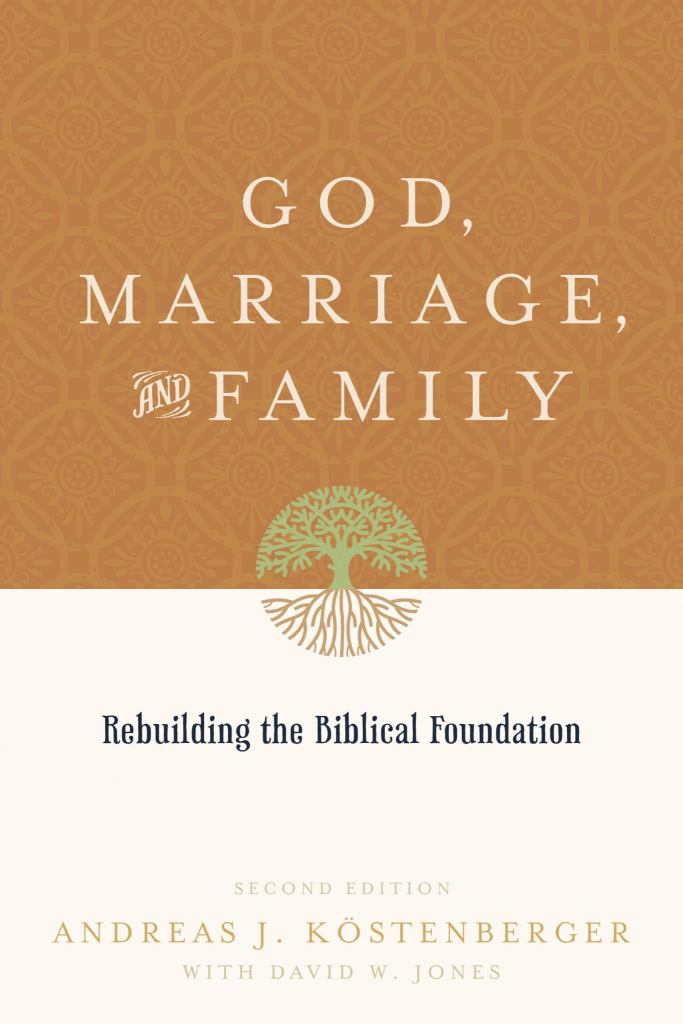
God, Marriage, and Family: Rebuilding the Biblical Foundation, by Andreas Köstenberger is a wide-ranging survey of issues related to marriage, family, and their intersection with the Church. It is Köstenberger’s opinion that “marriage and the family are institutions under siege” and that this siege is “symptomatic of a deep-seated spiritual crisis” (15) – and I believe he is correct. It is his objective in this book to help the reader to reflect on marriage and family from an explicitly biblical worldview.
Köstenberger does a good job addressing a broad range of issues and he provides a bibliography for each chapter. Köstenberger writes for the average reader, saving his more academic content for the endnotes and bibliographies. The frequent summary charts scattered throughout the book are also very helpful for quickly digesting the information provided. Because it is a survey, the book is not able to dive deeply into all of the topics addressed; however, Köstenberger still provides reasonable depth to each topic and gives additional attention to some of the more controversial ones. This book would be very helpful as an introduction and primer for further study.
Book Summary
The book begins by surveying the Old and New Testaments in order to build a biblical understanding of marriage and family (chapters 2-6). Köstenberger presents a case for a complementary view of marriage. If the reader is already inclined to think along the same lines, then they will enjoy Köstenberger’s careful explanation of what such a view does and does not entail; however, a reader antagonistic to complementarianism will likely not be convinced to change their position by the survey provided in the book. They will, however, be given food for thought and plenty of bibliographic information to pursue the argument further.
Köstenberger begins addressing specific topics related to marriage and family in chapter 7 in which he discusses childbearing (or voluntary lack thereof). The highlight of this chapter is the discussion on contraception and the ethical concerns to take under consideration when choosing whether to use contraception and, if so, what method. Frank discussions about such issues is needed in the Church. Other special issues addressed include singleness (ch. 9), homosexuality (ch. 10), divorce and remarriage (ch. 11 and the Appendix), marital qualifications for church leadership (ch. 12), and the relationship between families and the Church (ch. 13).
Assessment
Regarding the marital qualifications for church leadership, Köstenberger presents his conclusions convincingly, with the exception of the possibility of a man who has never been married being placed in the role of elder/shepherd. The fact that having the proven ability to run one’s household well is tied with one’s qualification to assume the role of elder/shepherd (as Köstenberger himself points out) seems to preclude a never-married individual from taking such a role. The discussions of contraception, homosexuality, and divorce and remarriage were particularly well done.
Köstenberger is very clear on where he stands on the topics addressed, but he deals fairly with opposing views. He does a good job indicating those issues which allow room for disagreement and those which do not. There are some points at which the book becomes too shallow in its surveying (e.g., the survey of marriages and families found in the Bible), but for the most part the depth is just about right for such a book. God, Marriage, and Family is an excellent survey and primer for further study.
 Studies in the Bible