
Introduction
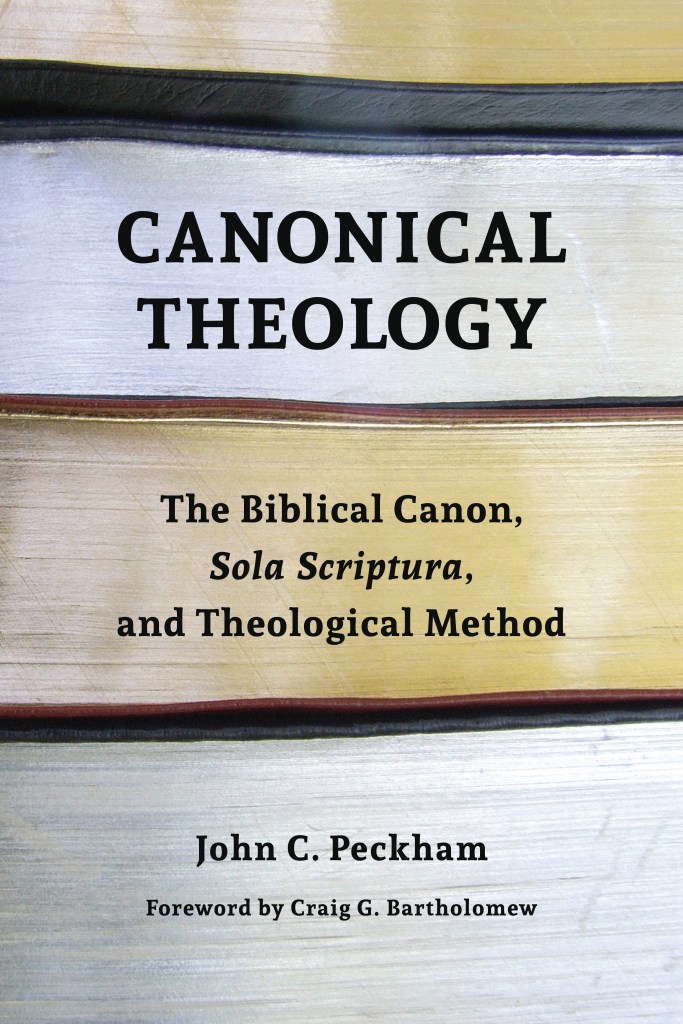
Canonical Theology, by John C. Peckham, is an academic treatment of canon, Scripture, and tradition. Peckham advocates for an intrinsic canon as opposed to a community view of canon and for a canonical approach to understanding Scripture as opposed to relying on an external interpreter of Scripture (such as a creed, rule of faith, or magisterium). Peckham is professor of theology and Christian philosophy at the Theological Seminary of Andrews University, which is a Seventh Day Adventist institution. In Canonical Theology, Peckham does not advocate for beliefs unique to Seventh Day Adventism and he does not cite Ellen G. White at all – this book is solidly biblical.
Intrinsic Canon
Peckham advocates for an intrinsic model of the canon, similar to the one proposed by Michael J. Kruger in Canon Revisited (a book that Peckham references several times). An intrinsic model of the canon simply means that the books of the Bible are canonical simply by virtue of God having inspired them. It is therefore the task of Christians to recognize what the biblical writings already are by their very nature, not to determine what they are through councils or other means (what Peckham defines as the community model). Peckham’s defense of the intrinsic model is well presented and answers some of the common objections leveled against it. For an even more thorough treatment of this topic, the aforementioned Canon Revisited is highly recommended.
Canonical Theology
Peckham does an excellent job defending the idea that the whole canon of Scripture should serve as the only rule of faith and that adding any external rules (creeds, rules of faith, magisteriums, etc.) not only does not solve the underlying questions, but often exacerbates the problems. Peckham advocates for a canonical approach to Scripture that takes into consideration the totality of Scripture and listens to tradition and alternate views, but without allowing either of those to assert authority over the text of Scripture itself. Listening to tradition and alternate views is important for Peckham in order to avoid an uninformed and isolationist view of sola Scriptura. In all of this, Peckham points out the need for humility as we approach Scripture: Scripture is infallible, but our interpretation of it is not.
This defense of a “canonical sola Scriptura” is a timely and necessary rejoinder to the increasingly loud calls to “retrieve” or “reclaim” tradition that many within the Evangelical / Protestant world are making. While it is important to know and learn from tradition, as Peckham repeatedly points out, it is necessary to always give Scripture the final say and to allow Scripture to adjust tradition, not the other way around.
The Inevitability of Diversity
One of Peckham’s points throughout the book is that there is nothing that can be done to fully prevent diversity of viewpoints in the interpretation of Scripture. The fact that creeds and confessions are legion and have never prevented schism or alternate views would point to the legitimacy of his point. While I agree with Peckham that diversity of views is inevitable, the question we must address is on what points and to what extent is diversity to be allowed without breaking fellowship. This is outside the scope of Canonical Theology, but it is a necessary question to grapple with if we are to concede that at least some diversity is inevitable. While not all points of theology or practice carry equal weight, but it is necessary to agree on at least certain main points. Currently, I think that F. Lagard Smith is probably closest to answering this question as outlined in Circles of Fellowship (formerly titled Who is My Brother?).
Conclusion
Canonical Theology is a very well written defense of the intrinsic model of the canon and of an historically-informed, non-isolationist sola Scriptura (Peckham’s “canonical sola Scriptura“). I would consider this book to be necessary reading for those studying Scripture, church history, or systematic theology at an academic level. It is an important answer to the growing claim that we need to “reclaim” tradition, creeds, or a rule of faith in order to make sure that Scripture is understood correctly. As Peckham ably points out, adding an external rule on top of Scripture not only removes Scripture from its place of primacy (at least in a functional sense), it only shifts the underlying questions. The best way to understand Scripture is to let the totality of Scripture to speak for itself. This will not prevent diversity of views (nothing can), but does seem to provide the best option for coming to the closest possible unity of understanding. Overall, this is a highly recommended book for those familiar with the issues it is addressing.
 Studies in the Bible