
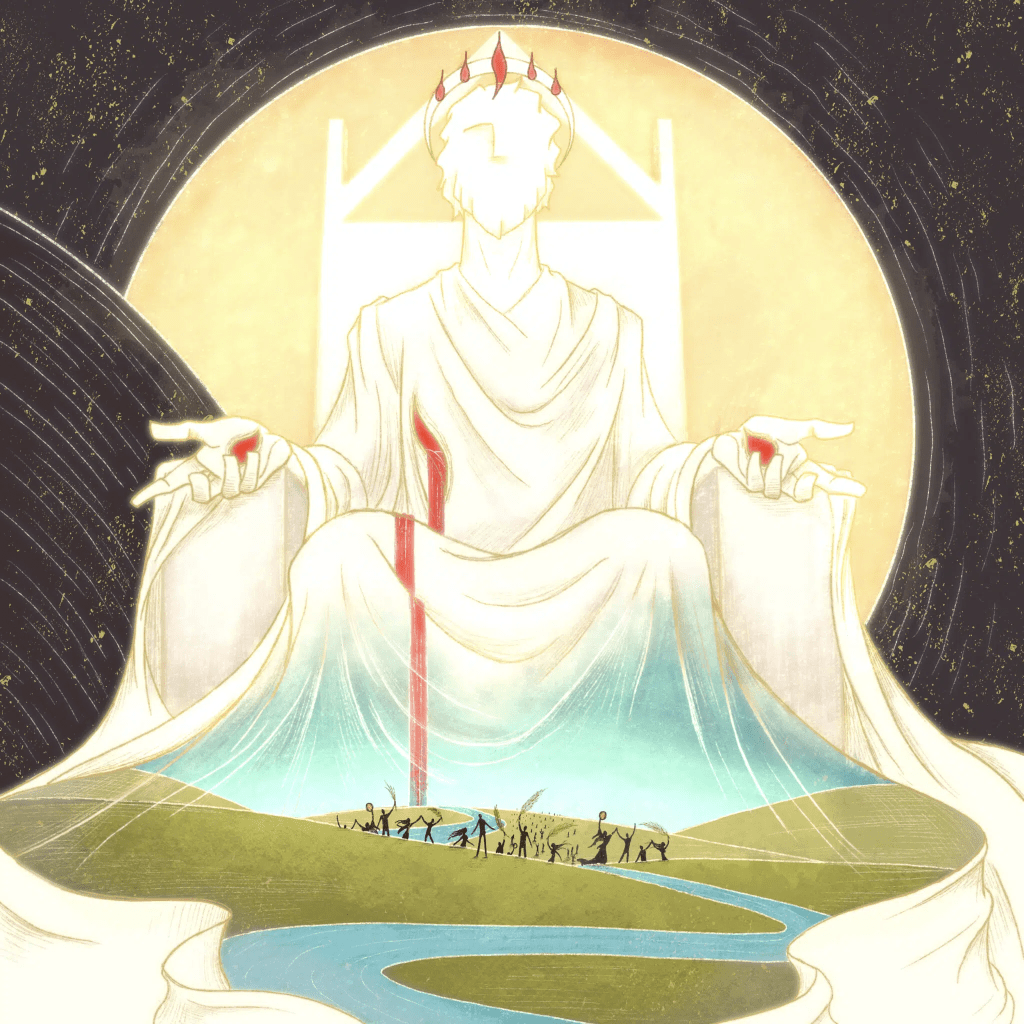
Who is Jesus?
The most important question that every person must answer is this: Who is Jesus? In his book Mere Christianity, C.S. Lewis presents the only three possible answers to that question: Jesus is either a liar, a lunatic, or Lord. These three options are in marked contrast to those who want to have Jesus as a good teacher, but nothing more than that. Only a good teacher is not an option, for if Jesus is merely a man, then He is either a liar or a lunatic. We only have three options when considering who Jesus is:
Option #1: Jesus knew that His claims were false; therefore, He was a liar.
Option #2: Jesus believed His claims, but His claims were false; therefore, He was a lunatic.
Option #3: Jesus believed His claims and His claims are true; therefore, He is Lord.
So, who is Jesus? Jesus is the Lord of all things, including Lord of our lives.
What is a Lord?
Other than landlords and drug lords, we don’t speak much of lords today, at least not in America. With the fall of the aristocracy, we as Americans have lost connection with what it means to be subject to a lord. Since that is the case, it would be helpful to define this term, “lord.”
Synonyms for lord include master, king, ruler, owner. A lord is one who has authority, dominion, and to whom obedience is due.1
This is Jesus: He is the master, king, ruler, and owner of all things. All things were created through Him and for Him and all things continue to exist only because He sustains the universe by His power (John 1:1-3, Colossians 1:15-16, Hebrews 1:1-3). Jesus has authority and dominion and we all owe Him our obedience.
Power over Creation
Jesus is lord over creation. Not only was He the means of creation (John 1:1-3, Hebrews 1:1-3), but during His earthly life He demonstrated His authority over the created world by His words and actions. He stilled storms (Matthew 8:23-27), caused a fig tree to die simply by His command (Matthew 21:18-21), healed diseases (throughout the gospels), cast out demons (throughout the gospels), has authority to command angels (Matthew 26:53), and even brought the dead back to life (Luke 7:11-17, John 11). All of creation, natural and supernatural, are under Jesus’s dominion. As the disciples asked after Jesus calmed the storm, “Who then is this, that he commands even winds and water, and they obey him?” (Luke 8:25), so too must we ask. The one who has command of nature is no less than the Lord of all things.
One Who Speaks with Authority
The Sermon on the Mount concludes by stating that “when Jesus finished these sayings, the crowds were astonished at his teaching, for he was teaching them as one who had authority, and not as their scribes” (Matthew 7:28-29). Not only did Jesus teach with authority, but He went so far as to say that everyone is obligated to do as He says (Matthew 7:21-27). Jesus claims to have authority to give eternal life (John 17:1-3) and says that He is the very personification of truth and life (John 14:6). Jesus claims to have authority over the Law of the Old Testament: He is greater than Solomon, greater than the temple, and is Himself Lord of the Sabbath (Matthew 12:1-8). Jesus attributed so much to Himself, that if His claims are not true then He is either a liar or a lunatic. But, if His claims are true, then He is nothing less than Lord of all things.
Implications of Jesus Being Lord
What are the implications of Jesus being Lord of all things? First, Jesus has the right to make laws that each of us are obligated to obey. It does not matter what we think of the laws – we are the subjects, not the lord – it only matters that we obey the laws. As Jesus says, it is not those who claim to have Him as Lord who will enter the kingdom of heaven, but those who actually do what He commands (Matthew 7:21-23). Jesus is not just the landlord, He is the universe-lord: all things are His, even our lives.
Second, Jesus has the right to punish those who rebel against Him. Rebellion against the King is punishable by death, even in an earthly sense. Hell itself was created in response to the original rebellion of Satan and his followers and those who join in this rebellion against the King will suffer the same fate (Matthew 25:41). Jesus sacrificed Himself so that all might be saved from God’s wrath and have eternal life through Him (John 3:16), but the wrath of God continues to abide on those who continue in there rebellion (John 3:36). Only by submitting to Jesus as Lord and being transferred out of the kingdom of darkness and into Jesus’s kingdom can we be saved from God’s wrath (Colossians 1:13-14).
A Lord Who Serves
Before concluding, we need to consider one last thing, something of a paradox. Although Jesus is Lord, King of all things, He is also a servant. During His life he put others before Himself. When He wanted to be alone, He was still willing to minister to those who sought Him out (Matthew 14:13-14). When His disciples refused to humble themselves, He Himself took on the role of a servant and washed everyone’s feet (John 13:1-20). Most strikingly, while we were still sinners, enemies of God, Jesus allowed men to torture and murder Him so that we might escape God’s wrath and have the hope of eternal life (Romans 5:6-11). If our Lord and King was willing to humble Himself in order to serve us, how much more ought we to serve one another?
“You call me Teacher and Lord, and you are right, for so I am. If I then, your Lord and Teacher, have washed your feet, you also ought to wash one another’s feet.” (John 13:13-14)
Conclusion
Who is Jesus? He is either a liar, a lunatic, or our Lord. If we accept the Bible’s description of Jesus’s words and actions, we are left with no option but to affirm that Jesus is Lord. We are His subjects and He has authority over everything, including our lives. From a biblical perspective, Christians are actually monarchists – we affirm that there is a King and that we are His loyal subjects. This idea may chafe at our individualistic reflexes, but it is the absolute truth. We are citizens of Jesus’s kingdom (Colossians 1:13-14), He is enthroned in heaven (Acts 2:32-36), and He will return as a King to distribute punishment and reward (Hebrews 9:27-28). May we seek to know the will of our Lord Jesus and strive to do it by the power of the Holy Spirit, all to the glory of God.
 Studies in the Bible